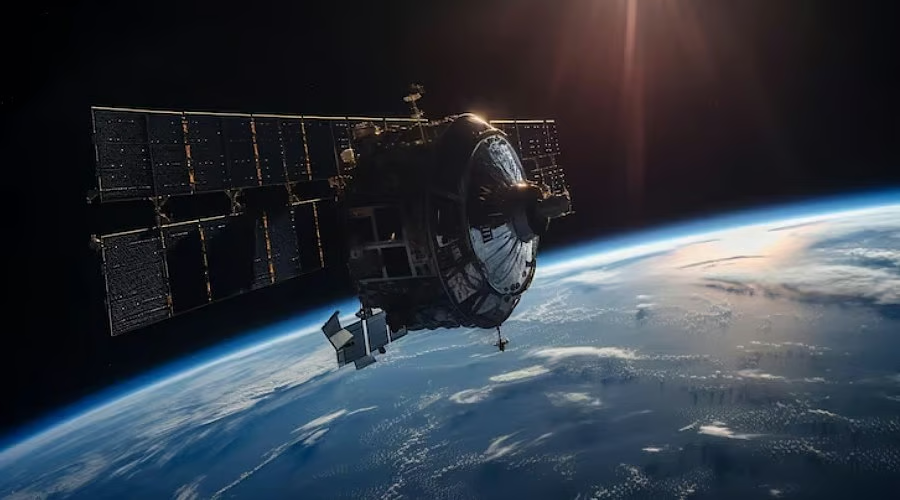
10 Space Technologies That Could Redefine the Future of Humanity
AI-summarised brief · reviewed before publication
The global space economy, currently valued at over $415 billion, is projected to exceed $1 trillion by the 2040s, driven by rapid commercial expansion. Private companies now generate nearly 71% of industry revenue, signaling a shift from government-led initiatives to commercial dominance. Key technological advancements include reusable rockets, which have reduced launch costs by approximately 90%, enabling more frequent satellite deployments and complex missions. Nuclear propulsion systems are being developed to shorten deep-space travel times, potentially reducing Mars journeys significantly. Additionally, the launch of roughly 4,500 satellites in 2025 highlights the growth of satellite networks for internet connectivity and disaster response. These innovations support permanent lunar bases, orbital manufacturing, and asteroid mining, transforming science fiction concepts into practical economic opportunities. Governments and private entities continue investing billions to enhance communication, navigation, and national security capabilities through advanced space systems.
💡 Why It Matters
- · The dominance of private enterprise in generating nearly three-quarters of industry revenue fundamentally shifts space exploration from a state-funded scientific endeavor to a robust commercial sector.
- · This economic pivot accelerates technological adoption, making high-cost innovations like reusable rockets and nuclear propulsion viable for broader applications beyond mere exploration.