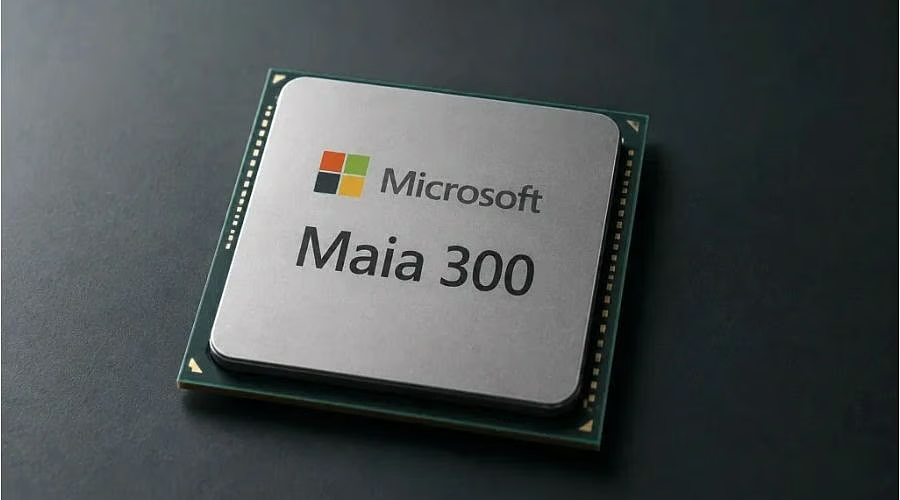
Microsoft Maia 300 AI Chip: How it Fares Against NVIDIA’s Dominance
AI-summarised brief · reviewed before publication
Microsoft plans to unveil its next‑generation Maia 300 AI accelerator as early as September, aiming to expand its custom silicon portfolio and lessen dependence on NVIDIA GPUs. The company is in talks with TSMC to secure capacity for over 300,000 chips by 2027, with a potential long‑term target of more than one million units. Maia 300 will target large‑scale AI inference workloads on Azure, including services built by Microsoft and models from OpenAI, and is positioned to cut inference costs at cloud scale. While specifications, benchmarks and pricing remain undisclosed, the chip follows the Maia 200, which uses a 3‑nm process, offers 216 GB HBM3e memory, 7 TB/s bandwidth and claims a 30 % performance‑per‑dollar edge. Microsoft hopes the new accelerator will attract major cloud customers such as Anthropic and complement, rather than replace, NVIDIA hardware for tasks where its own software stack can be optimized.
💡 Why It Matters
- · By fielding a high‑volume, in‑house AI chip, Microsoft could reshape cloud pricing dynamics and lock in enterprise customers to its Azure ecosystem.