From Silicon Valley to DC, the tech world is suddenly obsessed with one concept in AI: Distillation
AI-summarised brief · reviewed before publication
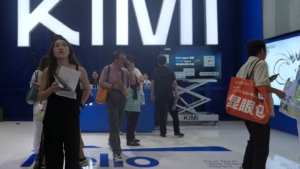
Artificial intelligence distillation has emerged as a critical focal point for both Silicon Valley tech leaders and Washington policymakers. Initially discussed by Google AI head Jeff Dean as a method to enhance smaller models, the technique now faces intense scrutiny regarding national security implications. Concerns escalated after Chinese lab Moonshot AI released Kimi K3, a model competitive with leading U.S. offerings from Anthropic and OpenAI. Unlike proprietary American models, Moonshot provides open-weight access. White House advisor Michael Kratsios alleged that Moonshot distilled Anthropic’s Fable model to develop K3, utilizing sophisticated methods to bypass detection. Critics describe this practice as intellectual property theft, allowing developers to leverage outputs from heavily invested frontier models without undertaking original training efforts. The controversy has prompted unprecedented coordination among major technology companies to address these security and ethical challenges.
💡 Why It Matters
- · The debate redefines intellectual property boundaries in the AI era, challenging the traditional moat of proprietary training data.
- · If distillation allows competitors to replicate frontier capabilities without equivalent investment, it fundamentally disrupts the economic incentives driving current AI innovation.