Simantic scales from Waterloo startup to global AI hardware innovator
AI-summarised brief · reviewed before publication
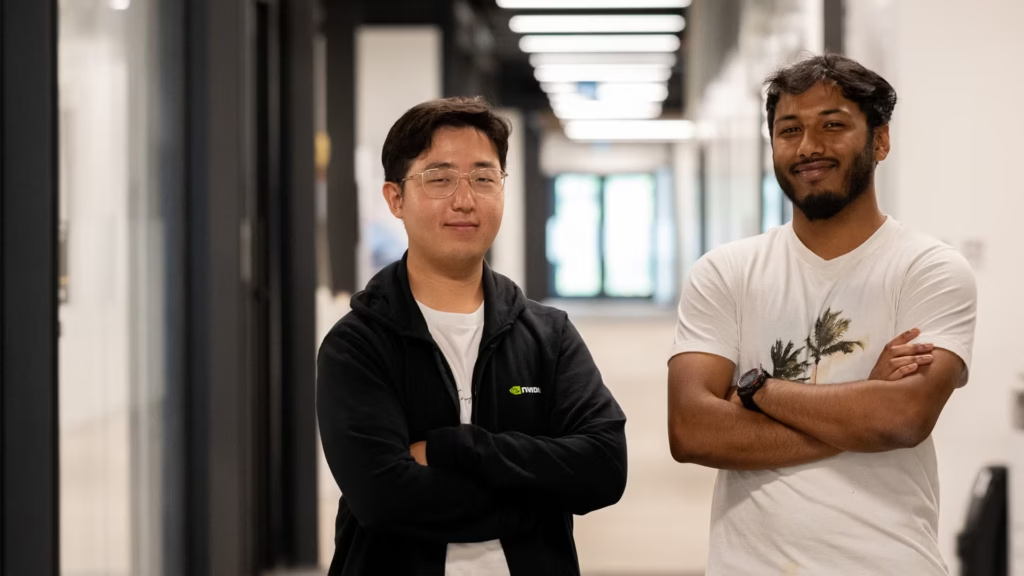
Simantic, a University of Waterloo startup founded by Seungmin Hong and Ahnaf Shahriar, is developing simulation technology to enable AI and engineers to test firmware in virtual environments before physical hardware exists. Launching in September 2025, the company addresses a critical bottleneck in hardware development where teams traditionally wait weeks or months for physical devices to validate embedded systems. The founders, leveraging co-op experiences at Tesla and Neuralink, identified this inefficiency across automotive, robotics, and semiconductor sectors. Simantic’s platform allows for realistic virtual testing, modernizing workflows by decoupling validation from manufacturing timelines. The venture gained significant traction within its first year, joining the Velocity incubator in 2026 and securing a spot in Y Combinator’s Fall 2026 cohort. Hong initially launched the solo venture before Shahriar joined as co-founder in early 2026. Their approach combines simulation with semantic understanding to support AI-driven engineering, aiming to reduce reliance on costly, time-consuming physical prototypes while accelerating the development cycle for next-generation hardware systems globally.
💡 Why It Matters
- · By decoupling firmware validation from physical manufacturing, Simantic removes a primary bottleneck that slows AI hardware deployment.
- · This shift allows engineers to iterate at software speeds, fundamentally compressing the timeline for bringing complex embedded systems to market.