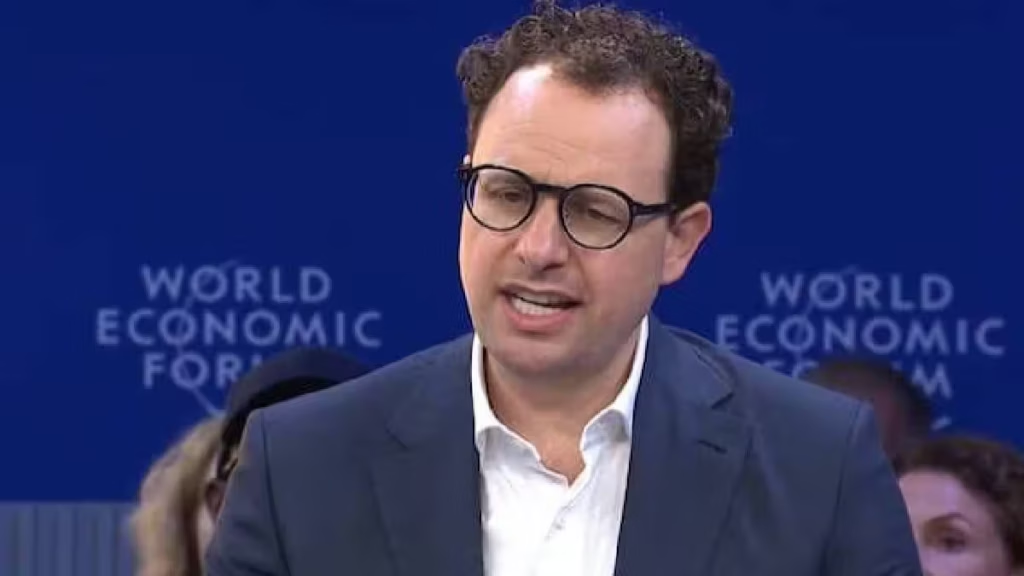
‘Don’t know if it’s possible’: Anthropic’s Amodei says China’s push to pull ahead complicates AI slowdown
AI-summarised brief · reviewed before publication
Anthropic CEO Dario Amodei has called for global coordination to slow artificial intelligence development, warning that geopolitical competition with China complicates these efforts. In a recent CBS News interview, Amodei expressed doubt about the feasibility of such an agreement, citing the significant military advantages and incentives for nations to pull ahead. This statement follows an essay by Amodei urging AI companies to decelerate model improvements amid growing safety concerns. The call for restraint aligns with recent warnings from leading researchers, including Anthropic’s Jacob Coxon, who criticized the industry’s rapid progress despite potential risks. Amodei proposes that governments and frontier AI companies collaborate to establish safety norms and monitor compliance. He suggests a staggered development approach involving embedded evaluators and international agreements. The initiative aims to ensure safety measures keep pace with increasingly capable systems. Amodei outlines four levels of potential international agreements, ranging from targeted restrictions to broader slowdowns. His proposal requires substantial government support to verify compliance across platforms. The effort seeks to balance innovation with safety, addressing mounting backlash over datacenter expansion and calls for regulation. Tech leaders, including Elon Musk, have begun supporting this coordinated approach to mitigate existential risks posed by advanced AI technologies.
💡 Why It Matters
- · Amodei’s admission that global AI coordination may be impossible exposes the fatal flaw in current safety proposals: they rely on voluntary cooperation between geopolitical rivals with opposing strategic interests.
- · This reality suggests that unilateral safety measures will likely fail as nations prioritize military dominance over collective risk mitigation.