The Ultimate Data Engineering Cheat Sheet (2026)
AI-summarised brief · reviewed before publication
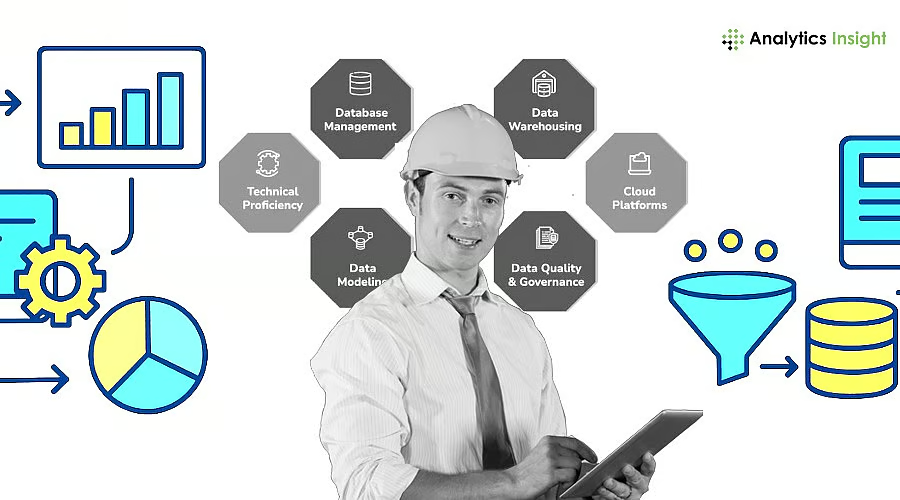
Modern data engineering prioritizes scalable, secure, and AI-ready platforms, with lakehouse architecture increasingly replacing separate data lake and warehouse deployments. As global data creation is projected to exceed 394 zettabytes by 2028, businesses are upgrading infrastructure to support advanced analytics and artificial intelligence. The discipline has evolved beyond simple data movement to emphasize speed, quality, security, and reliability. The engineering process involves collecting data from diverse sources, cleaning and formatting it, and ensuring quality compliance before use in reports or machine learning models. Data engineers are highly sought after, requiring proficiency in SQL, cloud technologies, and AI integration. Employers in 2026 favor candidates with both traditional engineering skills and AI knowledge. Popular storage solutions include Snowflake, Google BigQuery, Amazon Redshift, and Azure Synapse Analytics. Strong governance remains essential for accurate outcomes, ensuring that every team trusts the information used for daily decisions, automation, and customer service initiatives across various business applications.
💡 Why It Matters
- · The shift toward AI-ready lakehouse architectures redefines technical hiring standards, making hybrid expertise in traditional engineering and artificial intelligence a mandatory qualification for industry professionals.